Tooth Decay in Children
Tooth decay is one of the most common dental conditions affecting children. Early assessment and treatment can help prevent discomfort, protect developing teeth and support a healthy smile.

What are the signs of tooth decay in children?
Tooth decay in children does not always look the same. Early signs may include white, chalky or brown marks on the teeth, while more advanced decay may appear as visible holes or areas where the tooth structure has broken down. Parents may notice changes around the front teeth, grooves of back teeth or areas where food frequently becomes trapped. Dark spots or staining can also sometimes indicate decay. Regular dental check-ups are important because some areas of decay may not be obvious to see at home, particularly between teeth or in the early stages.
Non-visual signs of tooth decay in children
Not all tooth decay is easy to see. Some children may experience sensitivity when eating cold, hot or sweet foods, while others may complain of tooth pain, discomfort when chewing or difficulty sleeping due to dental pain. Younger children may show changes in behaviour, become unsettled during meals or avoid using a particular side of their mouth. Occasionally, tooth decay can progress without obvious symptoms, which is why routine dental visits are important. Early detection allows us to identify problems before they become more complex, helping protect your child’s comfort and overall dental health.
How does tooth decay start?
Tooth decay begins when bacteria in the mouth use sugars from food and drinks to produce acids that gradually weaken the tooth enamel. Over time, repeated acid attacks can cause minerals to be lost from the tooth surface, eventually leading to a cavity. Children can be more vulnerable to decay as their teeth are still developing, and factors such as frequent snacking, sugary drinks, reduced saliva flow and difficulty cleaning certain areas can increase risk. The good news is that tooth decay is largely preventable. Early guidance, regular dental visits and good oral habits can make a significant difference.
What is Included In My Braces Treatment?
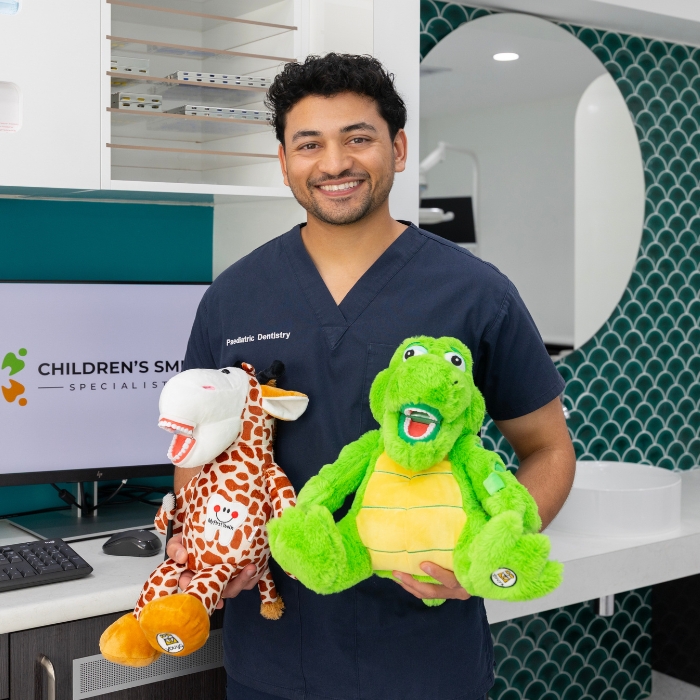
At Children’s Smile Specialists, we believe great paediatric dental care is about more than treating teeth- it’s about understanding children. Our specialist paediatric dentists bring years of focused training in children’s oral health, growth and development and behaviour guidance to provide care tailored to each child. From their first visit through to more complex treatment, we focus on building trust, creating positive experiences and helping children feel confident in the dental environment.
FAQ
Frequently Asked Questions (FAQ)
Paediatric dentists are specialists who care for the oral health needs of infants, children and teenagers, including those with additional medical, developmental or behavioural needs. We complete three additional years of specialist training to diagnose, prevent and manage dental problems while creating a calm and supportive environment where children can feel comfortable. We aim to create positive experiences from an early age, helping children develop healthy habits and confidence that lasts well beyond childhood.
A chalky molar is a common way of describing Molar Incisor Hypomineralisation (MIH), a condition where some adult teeth develop with weaker enamel. These teeth can appear white, yellow or brown and may be more sensitive, prone to breaking down or harder to keep clean. Early assessment by a paediatric dentist can help identify these teeth, manage sensitivity, protect the enamel and provide a plan to support your child’s long-term oral health.
No referral is required to see a paediatric dentist. Parents can contact us directly if they have concerns about their child’s teeth, development or dental experience. We also work closely with family dentists, orthodontists, GPs and other health professionals who may recommend an early specialist dental assessment.
Yes. Dental anxiety is very common in children, and our approach focuses on helping them feel safe and understood. We take time to build trust, explain things in a child- friendly way and tailor each visit to suit their individual needs. For children who need extra support, we can discuss options such as nitrous oxide sedation (“happy gas”) or treatment under general anaesthesia when appropriate. Our aim is to make dentistry a positive experience.
Review